
Loading...
Loading...

In this guide, we break down everything you need to know: what the differences are, whether you should replace yours, and what the process looks like at our Muscat clinic.
Dental amalgam has been used in dentistry for over 150 years. It is a mixture of metals — including silver, tin, copper, and approximately 50% mercury by weight. While amalgam is durable and cost-effective, growing concerns about its mercury content, appearance, and structural impact on teeth have led to a worldwide decline in its use.
In fact, the European Union officially banned the use of dental amalgam for most patients in 2023 — a sign that the dental world is moving definitively away from this material.
White fillings — also called composite resin fillings — are made from a tooth-coloured mixture of plastic and glass. Unlike amalgam, composite bonds directly to the tooth structure, which means:
At Tru Smile Dental Care, we use only high-quality composite materials that are shade-matched precisely to your natural tooth colour, so the result is virtually invisible.
| Feature | Silver Amalgam | White Composite |
|---|---|---|
| Appearance | Dark silver/black, visible when smiling | Tooth-coloured, virtually invisible |
| Mercury content | ~50% mercury by weight | Zero — completely mercury-free |
| Bonding to tooth | Mechanical (no bonding) | Chemically bonds & strengthens tooth |
| Tooth preservation | Requires larger cavity removal | Minimal drilling — more tooth saved |
| Durability | 10–15 years average | 7–10+ years with good care |
| Temperature sensitivity | Expands/contracts with heat & cold | Minimal thermal expansion |
| Time to complete | One visit | One visit |
| Eco-friendly | Mercury disposal concerns | Environmentally safe |
| Cost (Oman) | Lower initial cost | Moderate — highly worthwhile |
1. They Can Crack Your Teeth Over Time
Metal expands and contracts with temperature changes every time you eat or drink something hot or cold. Over years and decades, this constant movement creates micro-fractures in the surrounding tooth. Many patients are unaware of this until a tooth actually cracks or breaks — which is both painful and expensive to treat.
2. Mercury Concerns
While dental authorities consider amalgam fillings to be safe when intact, scientific research confirms that mercury vapour is released in small amounts during chewing, grinding, and even brushing. For most healthy adults, this is considered low-risk — but for pregnant women, nursing mothers, children, and those with kidney conditions, the guidance is increasingly to avoid amalgam altogether.
3. They Look Unsightly
This is the reason most of our Muscat patients come to us. Silver fillings darken over time and can give teeth a greyish tint — even the surrounding enamel can become discoloured. When you laugh or speak, your back teeth are often visible, and dark metal can significantly impact your confidence and smile aesthetics.
4. Old Fillings Leak and Fail
No filling lasts forever. Over time, the seal between your amalgam filling and your tooth can break down, allowing bacteria and saliva to seep underneath. This leads to secondary decay — often discovered only when significant damage has already occurred. Replacing ageing fillings before they fail is a proactive way to protect your long-term dental health.
5. Modern Materials Are Simply Better
Composite materials have advanced dramatically over the past decade. Today's composites are strong, durable, and closely match the mechanical properties of natural tooth enamel. There is no longer any functional reason to keep amalgam fillings — composite performs as well or better, with none of the drawbacks
Yes — when done correctly by a trained dentist. At Tru Smile Dental Care in Muscat, we use the SMART (Safe Mercury Amalgam Removal Technique) protocol, which includes:
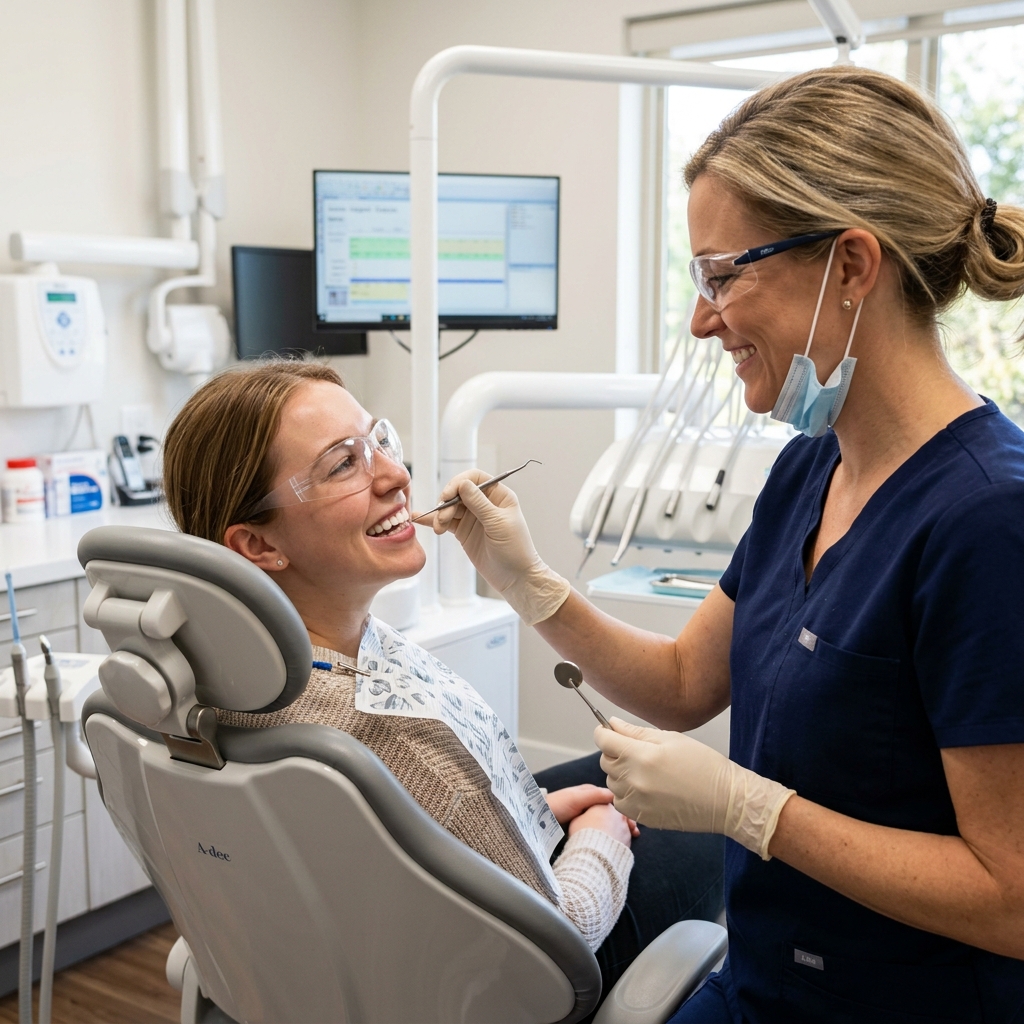
Replacing amalgam fillings with composite at our Muscat clinic is a straightforward, comfortable procedure completed in a single appointment. Here is what to expect:
Most patients are amazed at how quick and comfortable the process is. You can eat and drink normally within a few hours.